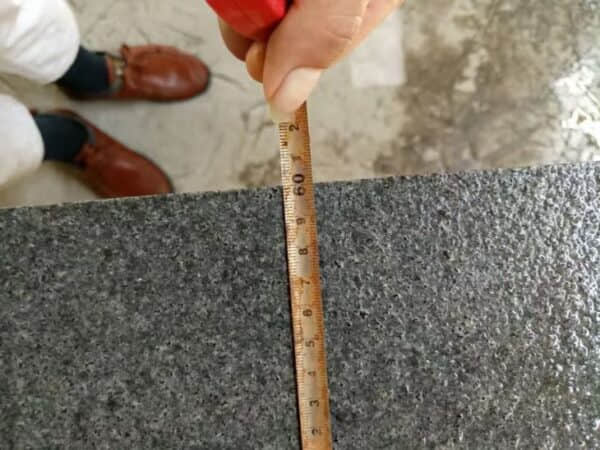
Selecting stone outdoor paving materials for exterior environments requires more than choosing a finish that looks good in a sample tray. For architects, contractors, and importers, the key questions are slip resistance, structural thickness, drainage behavior, and how the stone will perform under weather exposure over time. A paving specification that works indoors can fail quickly outdoors if freeze-thaw cycles, traffic loads, and surface wear are not addressed at the purchase stage.
Slip Resistance for Stone Outdoor Paving in Public Areas
Surface finish is the first technical filter for exterior paving. A polished marble or limestone slab may look elegant on a wall, but it is unsuitable for pool decks, plazas, or pedestrian circulation zones where wet slip risk is a real liability. Flamed, bush-hammered, sandblasted, or brushed finishes create the surface texture needed for reliable traction while still preserving the stone's natural character.
For public projects, slip resistance should be discussed alongside maintenance. Some heavily textured finishes perform well at installation but trap dirt in service if the stone selection is too porous or the pattern layout encourages standing water. The better approach is to match finish, density, and cleaning expectations before the paving package is finalized.
Thickness Specification Based on Load-Bearing Requirements
The right thickness depends on what the paving will carry. Pedestrian garden paths, hotel courtyards, and drive-over access zones place very different demands on the stone. Thin tiles may be acceptable over a fully supported slab in low-load areas, but open-base paving or vehicular traffic usually requires thicker material and a more robust bedding system.
| Application Zone | Typical Thickness | Primary Concern |
|---|---|---|
| Pedestrian Walkways | 20mm - 30mm | Slip resistance and finish durability |
| Pool Decks | 30mm | Wet safety and thermal comfort |
| Public Plazas | 30mm - 50mm | High traffic and dimensional stability |
| Light Vehicular Access | 50mm+ | Load distribution and edge break risk |
Granite is often preferred for heavy-use paving because of its compressive strength and abrasion resistance, while some limestones and sandstones are better reserved for lower-load or more decorative zones. Matching the stone category to the service load is as important as choosing the right thickness.
Managing Freeze-Thaw Cycles and Porosity
In cold climates, water absorption becomes one of the most important purchasing criteria. A dense granite or quartzite will usually tolerate freeze-thaw conditions better than a porous limestone or poorly selected sandstone because there is less internal moisture available to expand during freezing. If the stone is highly absorptive, repeated weather cycling can lead to scaling, edge failure, or surface spalling.
This is why outdoor paving specifications should review lab data, quarry consistency, and finish choice together. A flamed surface may improve slip resistance, but it also changes how moisture behaves on the face of the stone. Buyers should confirm that the finish being quoted is the finish tested for exterior use.
Layout and Drainage for Long-Term Maintenance
Even well-selected stone will underperform if the paving layout traps water or creates unstable joints. Joint width, slope, bedding, and edge restraint all affect service life. Large-format paving may reduce visible joints, but it also demands tighter substrate control to avoid rocking, ponding, or corner stress after installation.
Which stone works best for outdoor paving?
Granite is the most common answer for heavy-duty paving because it combines low porosity, high strength, and good finish versatility. Quartzite can also perform well where a more natural split texture is required.
Is limestone suitable outdoors?
It can be, but only when the variety is dense enough for the climate and the finish is chosen correctly. Some limestones work well on facades or mild-climate terraces, while others are too absorptive for freeze-thaw exposure.
What finish is safest for wet paving?
Flamed, bush-hammered, sandblasted, and brushed surfaces are common options because they provide more grip than polished stone. The exact finish should match traffic level and maintenance expectations.
Why does drainage matter so much?
Standing water accelerates slip risk, staining, biological growth, and freeze-thaw damage. Good drainage design protects both the stone and the installation system beneath it.
Before confirming a paving order, review the stone type, finish, thickness, and climate exposure in one package rather than approving each decision separately. That is usually where long-term outdoor performance is won or lost.


