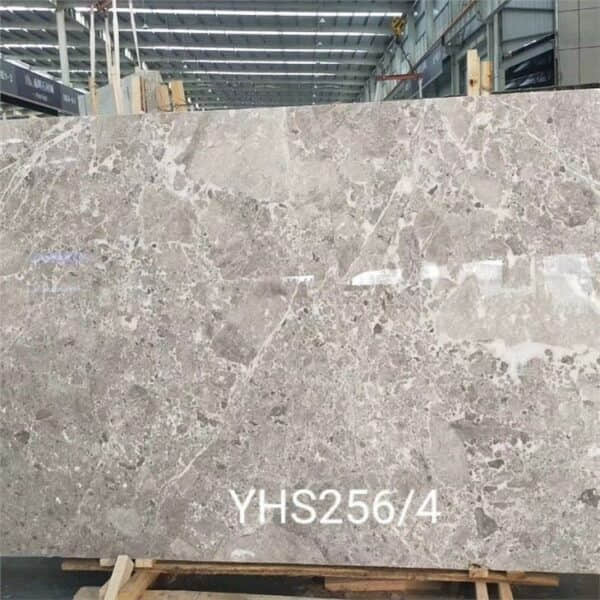
The slab vs tile stone decision for commercial projects is more than an aesthetic choice; it is an engineering and logistics decision. While both formats originate from the same quarry block, their application, installation costs, and long-term performance profiles differ significantly.
Slab vs Tile Stone: Defining the Formats
In the global stone trade, we define these formats by their industrial dimensions and processing methods:
- Slabs: Massive panels typically measuring 115–130" wide and 55–70" high. Standard commercial thicknesses are 2cm (3/4") and 3cm (1 1/4").
- Tiles: Pre-cut, calibrated units. Common sizes include 12"x12", 18"x18", and 24"x24". Thickness is usually calibrated between 3/8" and 3/4".
Which Format Offers the Best ROI for Your Space?
Selecting the correct format requires a comparative analysis of visual impact versus structural demands. Slabs provide a monolithic appearance, virtually eliminating grout lines and showcasing the natural flow of the stone's veining. Tiles, while more labor-intensive to install due to the number of joints, offer much higher material efficiency and easier handling on-site.
Over a 10-15 year lifecycle, tiles often prove more durable in high-traffic floor zones because they can accommodate slight shifts in the subfloor without cracking across a massive span. Slabs, conversely, are the superior choice for vertical cladding where visual drama is the primary goal.
Application-Specific Recommendations
When to Specify Slabs:
- Kitchen Islands: To achieve seamless, waterfall edges.
- Feature Walls: For high-impact book-matching in lobbies.
- Grand Staircases: Where continuous vein flow across treads and risers is required.
- Luxury Vanities: When a mitered apron front is desired for a massive look.
When to Specify Tiles:
- Corridors and Hallways: For cost-effective coverage of high-traffic transit zones.
- Public Restrooms: Where slip resistance (provided by grout lines) is a safety requirement.
- Standard Guestrooms: Where individual unit layouts are consistent and efficiency is key.
- Multi-Unit Developments: To simplify logistics and reduce the need for specialized heavy-lifting equipment.
Frequently Asked Questions
Can I approximate the look of a slab with large-format tiles?
Yes. 24"x48" or 36"x36" tiles can reduce the number of grout lines significantly, providing a near-slab look at a 30-50% lower material cost.
Which format is more slip-resistant?
Tiles are generally safer for flooring. The network of grout lines provides natural friction, which is essential for public areas. Full-polished slabs can be dangerously slick when wet.
How does lead time differ between the two?
Standard tiles are often stocked in regional warehouses for immediate dispatch. Slabs generally require project-specific fabrication and have a longer lead time of 4-8 weeks.
Is there a price difference for the same material?
Slabs carry a higher price per square foot due to the difficulty of extraction, handling, and the waste involved in achieving specific pattern matches. Expect a 25-40% premium for slabs over standard tiles.
For projects involving slab specifications on upper floors, ensure you have confirmed the floor load capacity with your structural engineer — a 3cm granite slab weighs approximately 18 lbs per square foot. Submit your project blueprints to our team for a comprehensive material yield analysis.


