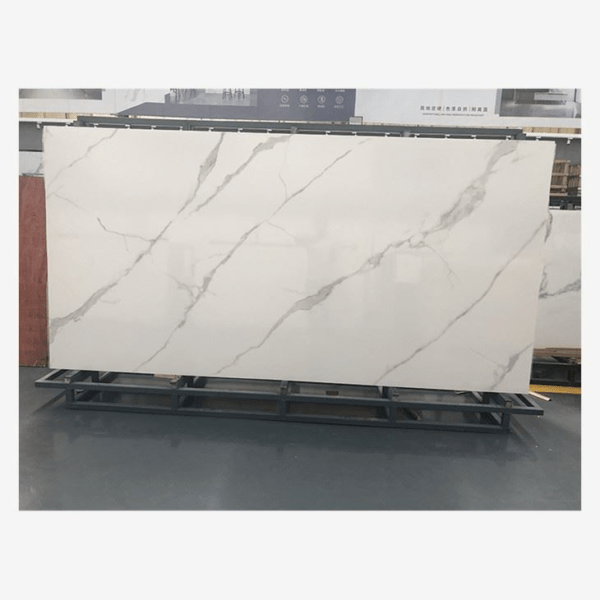
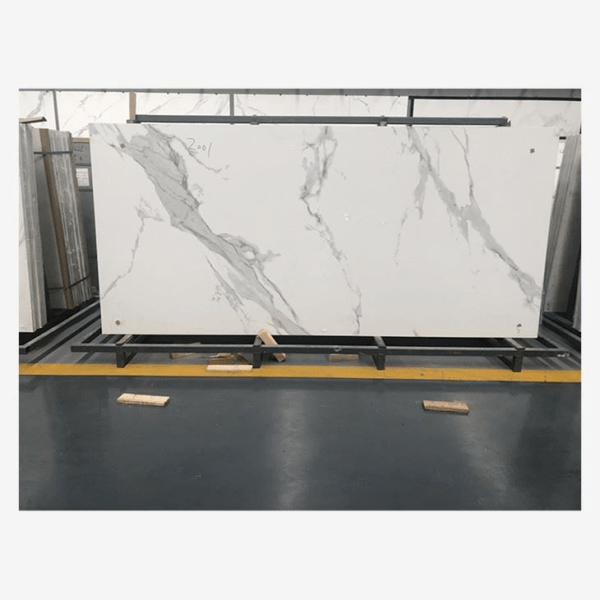
Specifying sintered stone slabs for commercial building facades, kitchen countertops, vanity surfaces, and heavy-footfall interior flooring represents one of the fastest-growing categories in modern architectural procurement. Sintered stone is a 100% natural mineral composite manufactured without resin binders. Formed by subjecting natural quartz, feldspar, clay, and mineral oxides to extreme hydraulic pressing (exceeding 15,000 to 25,000 metric tons) and high-temperature kilning (between 1,200°C and 1,250°C), sintered stone mimics the natural metamorphic crystallization process occurring over millennia in the earth crust.
This comprehensive buyer guide evaluates sintered stone procurement, detailing manufacturing technologies, standard jumbo slab dimensions, thickness categories, surface finish variations, thermal and mechanical performance specs, edge fabrication rules, and container loading security for stone fabricators, B2B importers, and project specifiers.
Understanding these technical parameters enables procurement managers to select reputable sintered stone suppliers, verify slab flatness tolerances, and specify proper diamond tooling for jobsite fabrication.
Manufacturing Physics: Sintered Stone vs. Quartz and Natural Stone
Clarifying the chemical and physical distinctions between sintered stone, engineered quartz, and natural marble prevents common specification errors:
- Sintered Stone (100% Mineral): Zero resin binder content. Sintered stone withstands direct heat above 600°C without burning, scorching, or emitting volatile organic compounds (VOCs). Water absorption is virtually zero (under 0.05% by weight), making it completely non-porous and immune to UV yellowing outdoors.
- Engineered Quartz (Resin-Bound): Contains 7% to 9% polyester resin binder mixed with quartz aggregates. Quartz is susceptible to thermal shock damage above 150°C and UV degradation when exposed to direct sunlight outdoors.
- Natural Marble and Granite: Natural quarried stone with varying porosity (0.2% to 2.5% absorption) requiring periodic sealer applications and vulnerable to acid etching from food acids.
Standard Jumbo Slab Dimensions and Thickness Categories
Sintered stone factories produce ultra-large jumbo slabs to minimize joint lines across commercial walls and large kitchen islands:
1. Standard Slab Dimensions
The standard commercial slab format measures 3200 x 1600 mm (126 x 63 inches), with specialized factories producing 3600 x 1200 mm or 3000 x 1500 mm formats. Large format slabs permit single-piece kitchen island designs without horizontal seams.
2. Standard Thickness Options and Applications
- 6mm (1/4 inch) Ultra-Thin Panels: Weighing under 15 kg/m², 6mm slabs are engineered for interior wall cladding, elevator cab linings, exterior ventilated curtain walls, and cabinet door overlays. Specifying a Calacatta-look sintered slab in 6mm thickness delivers luxury marble aesthetics for high-rise feature walls without structural weight penalties.
- 12mm (1/2 inch) Countertop Format: The primary thickness specified for residential kitchen islands, vanity tops, and commercial bar counters. A durable 12mm sintered countertop slab provides high flexural strength and supports overhangs up to 250mm with proper perimeter framing.
- 20mm (3/4 inch) Heavy-Duty Format: Designed for heavy commercial food service decks, un-supported cantilevers, and high-impact commercial flooring.
Surface Finish Options for Sintered Stone
Digital inkjet printing combined with mechanical surface presses produces diverse tactile and visual surface treatments:
Polished Finish: A high-gloss, reflective finish achieved by fine diamond abrasive polishing pads. Polished sintered stone highlights fine vein detail, though matte options are preferred for exterior flooring slip resistance.
Matt / Silk Finish: A soft, glare-free satin finish with subtle tactile texture, ideal for contemporary kitchen counters, bath vanities, and high-footfall commercial flooring.
Honed / Velvet Finish: Smooth matte surface providing high scratch resistance and low light reflection, popular in modern architectural spaces.
Textured / Carved Finish: 3D mechanical press texturing that mirrors natural slates, rough-cut basalts, or bush-hammered granites. Specifying a textured sintered wall cladding panel adds deep tactile shadow lines to building facades and water features.
Mechanical Performance Specs and Testing Standards
Independent testing under ISO and EN standards confirms the extreme physical durability of premium sintered stone:
- Flexural Strength (ISO 10545-4): 45 MPa to 55 MPa, far exceeding natural granite (14 MPa to 18 MPa) and natural marble (10 MPa to 14 MPa).
- Mohs Hardness (EN 101): Grade 7 to Grade 8 rating. Sintered stone cannot be scratched by standard steel cutlery, kitchen knives, or copper cookware.
- Thermal Shock Resistance (ISO 10545-9): Withstands rapid temperature swings from -20°C to +150°C without cracking, spalling, or micro-fracturing.
- Stain & Chemical Resistance (ISO 10545-13): Class A chemical resistance, immune to household acids, bleach, wine, coffee, and industrial solvents.
Evaluating a comprehensive natural stone vs sintered comparison clarifies why commercial projects specify sintered slabs for zero-maintenance food preparation decks.
Fabrication Rules, Edge Processing, and Tooling
Fabricating sintered stone requires specific diamond tooling speeds and stress-relief cutting techniques to prevent slab cracking during sawing:
1. Stress-Relief Perimeter Cuts
Internal tension exists inside large fired slabs. Masons must trim 20mm to 30mm off all four outer edges of raw slabs before executing internal sink cutouts or 45-degree mitre cuts to release internal material stress.
2. High-Speed Waterjet and Bridge Saw Tooling
Bridge saws must utilize specialized continuous-rim diamond blades designed specifically for sintered porcelain, operating at slow feed rates (1.0 to 1.5 meters per minute) with high-volume water cooling. Waterjet cutting systems should operate at high pressure (above 3,800 bar) with fine garnet abrasive to prevent edge chipping along cut paths.
3. Rear Fiber Mesh and Edge Arris Chamfering
Slabs backed with fiberglass mesh require continuous support across CNC waterjet tables. All finished edges require a minimum 1.5mm to 2.0mm arris chamfer to distribute impact energy and prevent sharp-corner chipping during daily use.
Procurement Quality Control and Container Loading Logistics
Sintered stone slabs are rigid, large-format panels that require strict transport protection:
- A-Frame Steel Crate Packing: Jumbo slabs must be loaded vertically on heavy-duty A-frame steel racks lined with rubber strip cushioning. Slabs are strapped using high-tensile polyester web ratchets with foam corner pads between faces.
- Flatness Tolerance Verification: Require factory QC certificates confirming slab warp curvature stays under 1.0mm across the entire 3200mm length (tested using precision laser straightedges).
- Container Payload Capacity: A standard 20ft container holds approximately 120 to 140 pieces of 12mm jumbo slabs across 4 A-frame steel racks, optimizing ocean freight costs.
Frequently Asked Questions
Can hot pans be placed directly on a sintered stone countertop?
Yes. Because sintered stone is manufactured at temperatures exceeding 1,200°C without resin binders, hot frying pans, baking sheets, and boiling pots can be placed directly on the surface without causing burn marks, thermal cracking, or discoloration.
Is sintered stone suitable for exterior building cladding in freezing climates?
Yes. Sintered stone has a water absorption rate below 0.05%, making it completely frost-proof and immune to freeze-thaw damage. In addition, its mineral pigments are 100% UV stable, preventing fading or color shifts under intense solar exposure.
How does sintered stone cost compare to natural granite and quartz?
Raw sintered stone slabs carry a similar material price to premium natural granites and high-end quartz. However, jobsite fabrication labor costs can be 15% to 25% higher due to requirements for specialized diamond blades, slow CNC feed speeds, and perimeter stress-relief cutting.
Can scratches on sintered stone be polished out on site?
Because sintered stone achieves a Mohs hardness of 7 to 8, it is virtually impossible to scratch during normal residential or commercial use. If severe industrial impact chips a polished edge, specialized epoxy color-matching kits and fine diamond polishing pads can repair the edge profile.