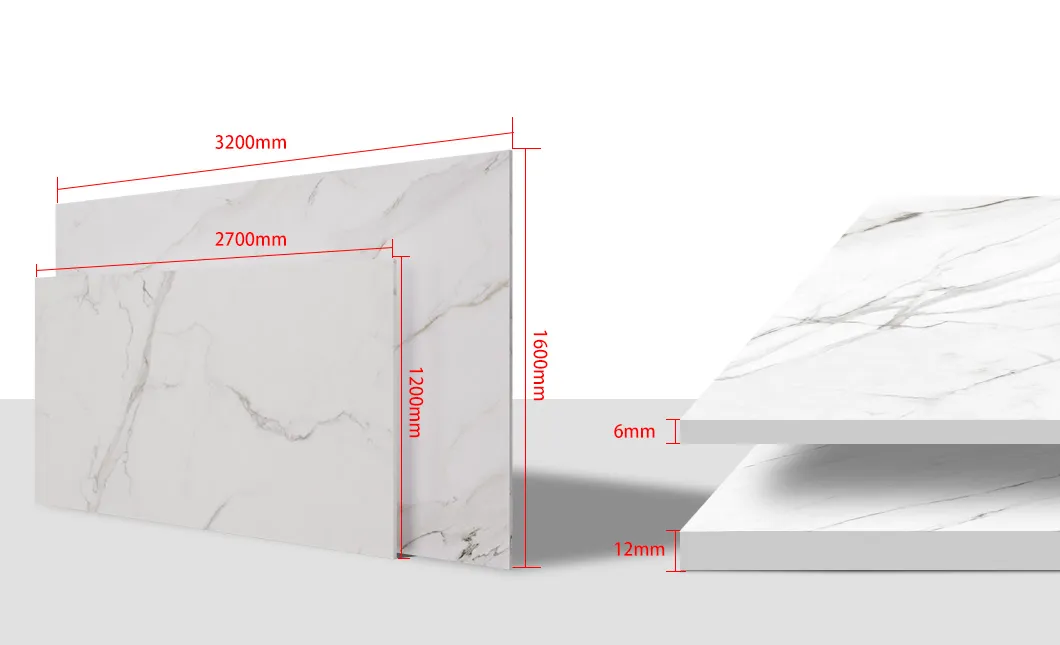
Optimizing material yield begins long before the first gang-saw cut touches the raw quarry block. In the world of B2B stone procurement, understanding stone slab sizes and the relationship between raw slab dimensions and finished project requirements is the difference between a cost-efficient installation and one burdened by excessive waste. Slab sizes are not arbitrary; they are governed by the geological limits of the quarry, the mechanical capacity of the extraction equipment, and the standard sizes of the gang-saws used in the processing facility. For architects and specifiers, planning layouts that respect these standard dimensions—typically around 240x120 cm for marble and up to 320x160 cm for engineered quartz—is essential for minimizing costs and ensuring pattern continuity across large surfaces.
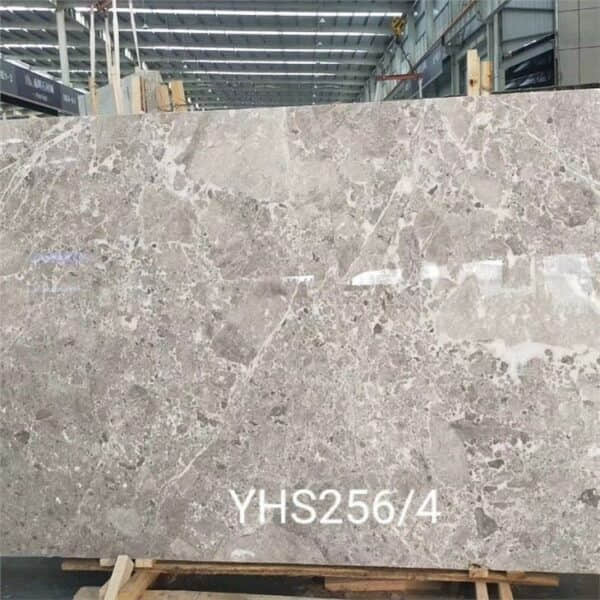
Stone Slab Sizes by Material Category
Natural stone slab sizes vary significantly depending on the material's structural integrity and the region of origin. Large-block extraction using diamond wire saws typically produces marble slabs that range from 2400 mm to 3000 mm in length and 1200 mm to 1800 mm in height. Materials like Classic Beige or Tundra Grey are often available in these larger formats, which are ideal for book-matched feature walls. Conversely, more fragile stones or those extracted from smaller quarries, such as certain exotic slates or semi-precious marbles, may have a maximum slab height of only 100 cm. When specifying for a project, the "usable area" of a slab is often 5–10 cm smaller than the gross dimensions due to irregular edges and the need for calibration.
Engineered materials follow a more standardized manufacturing protocol. For Summerly Quartz and JPA1632GA sintered stone series, the industry benchmark is the "Jumbo" slab, measuring 3200x1600 mm (approximately 126"x63"). This standardization allows for highly efficient layout planning, as designers can rely on a consistent grid. Sintered stone is also available in ultra-thin 9 mm formats for wall cladding and standard 20 mm formats for heavy-duty countertops. Because these materials are manufactured under controlled conditions, the slabs are perfectly rectangular and have a 100% usable surface area, which significantly simplifies the waste calculation process compared to the irregular shapes of natural marble blocks.
Strategies for Minimizing Waste and Maximizing Yield
Material waste in stone fabrication, often referred to as "off-cut loss," can range from 15% to over 40% if not managed correctly. To minimize this, specifiers should adopt a "layout-first" approach. By requesting a high-resolution photo of the exact slabs in the current stock, designers can use digital slab-matching software to overlay their cutting list onto the material. This is particularly foundational for materials with bold veining, such as Calacatta or Statuario. If a kitchen island requires a 300 cm length, sourcing a slab that is exactly 300 cm is risky; a "buffer" of at least 5 cm on all sides is required for the final edge polishing and mitered joinery. If the slab is too small, a seam will be necessary, which can disrupt the visual flow of the veins.
Another strategy for yield optimization is the use of "pre-cut" or "cut-to-size" (CTS) orders for standardized project elements. For hotel bathrooms, specifying standard vanity top widths of 24", 30", 36", 42", 48", 60", or 72" allows the factory to use smaller "remainder" slabs that might otherwise be discarded. This not only reduces the per-square-meter cost but also aligns with sustainable sourcing practices by utilizing the entire quarry block. When planning large flooring areas, choosing dimensions that are multiples of the slab height—such as 600x600 mm or 600x1200 mm tiles—ensures that the gang-saw cuts produce a high yield with minimal narrow off-cuts that cannot be repurposed.
Manufacturing Limits: Gang-Saws, CNC, and Logistics
The maximum size of a slab is ultimately limited by the processing machinery and the logistics of shipping. A standard gang-saw (the large machine that slices the block) has a specific frame width; if a block is extracted that exceeds this width, it must be trimmed, potentially losing valuable material. Similarly, CNC infrared cutting machines, which are used for final precision shaping, have maximum table dimensions. For 20 mm thick sintered stone, the cutting pressure of 300-320 bar and the opening speed of ≤200 mm/min must be maintained across the entire slab to prevent breakage. These mechanical constraints mean that even if a quarry can produce a 4-meter block, the industry's processing infrastructure is generally optimized for a maximum of 3.2 meters.
Logistics also play a role in size specification. Standard seaworthy wooden crates and A-frame bundles are designed to fit within a 20-foot shipping container. Slabs exceeding 330 cm in length or 200 cm in height often require specialized open-top containers or flat racks, which dramatically increases the shipping cost per square meter. For international procurement, staying within the "Jumbo" 320x160 cm limit for engineered stone or the 280x160 cm limit for natural marble ensures that the material can be safely packed and transported without the need for bespoke, high-cost logistical solutions. This standardization is foundational for maintaining the 30% deposit and 70% balance payment structure typical of large-scale B2B stone trades.
- Quartz/Sintered Standard: 3200 x 1600 mm
- Marble Commercial Range: 2400-3000 mm x 1200-1800 mm
- Granite Standard: 2600-3200 mm x 1500-1900 mm
- Slate/Limestone Tiles: 300x300 mm, 600x600 mm, 1200x600 mm
What is the difference between net and gross slab area?
The gross area is the total measurement of the slab as it comes off the gang-saw, including irregular "natural" edges and potential fissures near the perimeter. The net area, or "usable area," is the rectangular section that can actually be used for fabrication. B2B buyers should always clarify whether a quote is based on the gross area (common for natural blocks) or the net area (common for engineered stone) to avoid under-ordering.
How does slab thickness affect the maximum usable size?
Thinner slabs are more susceptible to breakage during handling and fabrication. While a 30 mm granite slab can safely be handled at 320 cm lengths, a 12 mm or 9 mm slab of the same length requires reinforced backing or specialized A-frame support. For wall cladding using 9 mm sintered stone, the large 1200x2400 mm format is preferred because it balances seamless aesthetics with enough structural integrity to be installed without high breakage rates.
What is "dry-lay" inspection and why is it necessary for large slabs?
Dry-lay inspection involves laying out the finished cut-to-size pieces on the factory floor before packaging. This is foundational for large slab projects to ensure that veining patterns align correctly across seams. It allows the QC team to verify that the color consistency is maintained and that no slab dimensions have been compromised during the transition from the raw block to the finished specification.
Can I specify custom slab sizes at the quarry level?
While large-scale projects can sometimes influence block extraction sizes, standard machinery limits usually prevail. Most quarries extract blocks based on the natural fault lines of the stone. For most commercial applications, it is more effective to work within the standard gang-saw limits of 300x160 cm rather than requesting custom sizes that may lead to higher prices due to the need for non-standard processing and shipping equipment.
Before finalizing a layout, verify the current batch's average height with your supplier. If a project requires 280 cm tall wall panels but the current quarry block of Calacatta only yields 265 cm slabs, the architectural design will need to incorporate a horizontal seam or a decorative transition strip to avoid a significant material deficit late in the construction phase.


