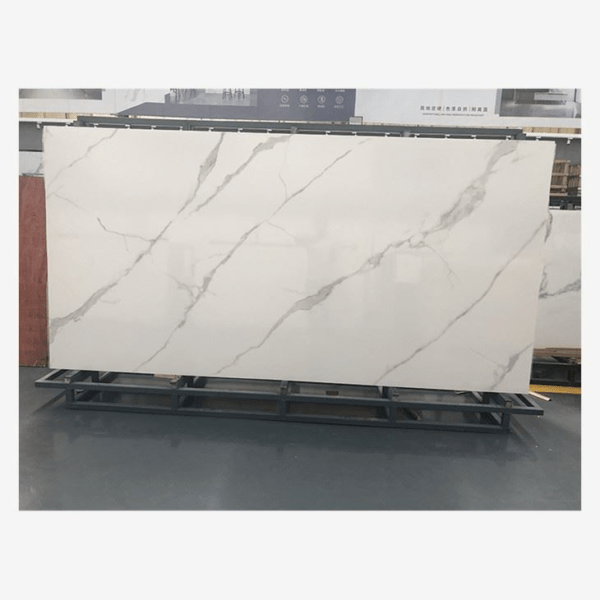
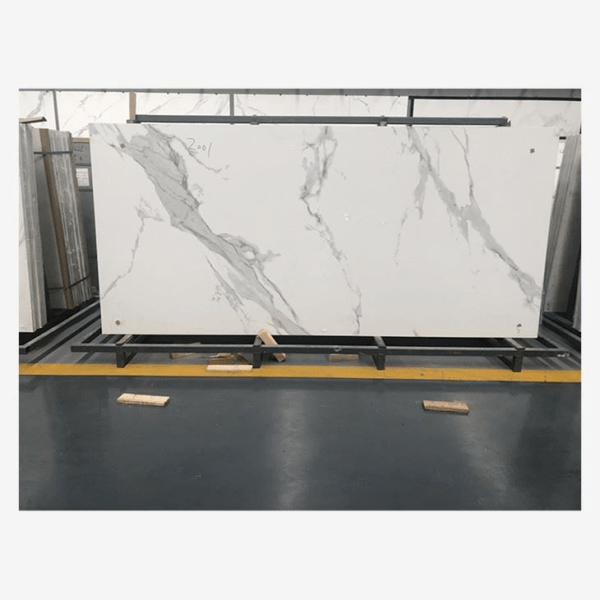
The sintered stone market 2025 has entered a period of unprecedented expansion, with global production capacity surpassing 600 million square meters. This surge is driven by a combination of technological breakthroughs in ultra-high-pressure pressing and a global shift toward sustainable, non-porous surfaces in both residential and commercial architecture. For B2B buyers and specifiers, the 2026 market offers a broader range of applications than ever before, as manufacturers successfully pivot from standard 12mm and 20mm slabs to ultra-thin 3mm formats that redefine possibilities for furniture cladding and architectural facades.
Market Valuation and the Dominance of China and Europe
The global sintered stone market was valued at approximately $929.45 million in 2025, maintaining a robust CAGR of 6.1%. China remains the undisputed global leader in production, accounting for over 70% of total annual output—roughly 420 million square meters. High-volume manufacturers like Monalisa and Dongpeng have expanded their international sales networks to over 100 countries. Meanwhile, European manufacturers in Italy and Spain, including Neolith, Laminam, and Cosentino (Dekton), continue to hold a 20% market share by focusing on the luxury segment.
The expansion of production capacity has been particularly aggressive in North America, where new U.S. anti-dumping duties on quartz imports have prompted a massive pivot toward sintered stone as a tariff-advantaged alternative, further accelerating its adoption in the commercial countertop sector.
Technological Shifts: Ultra-Thin Formats and Processing Specs
Technological innovation in 2025 has centered on "going thin." Manufacturers are now mass-producing 3mm ultra-thin slabs flexible enough for curved surfaces and light enough for elevator interiors and cabinetry cladding. The 1600x3200mm large-format slab remains the industry standard for seamless flooring and high-end kitchen islands. The 2026 market also sees the rise of "Full-body Digital" printing, where the pattern extends through the entire thickness of the slab, eliminating the "white edge" problem during mitered joinery.
For fabricators, StoneTrades specifications for 20mm sintered slabs mandate a water pressure setting of 300-320 bar during CNC cutting. The feed rate for openings must be strictly controlled at ±200mm/min, utilizing a curved entry (arc-in) path. Fabricators must also account for the material's thermal properties, ensuring that expansion joints are properly integrated in outdoor facade applications.
Sintered Stone vs. Natural Stone: The 2026 Buyer Choice
As of 2026, the choice between sintered stone and natural stone is increasingly based on specific application performance rather than cost alone. Sintered stone's non-porous, antibacterial surface makes it the preferred choice for healthcare facilities and high-traffic food service areas. In contrast, natural stones like Taj Mahal Quartzite or Tundra Grey marble are chosen for their unique geological character and the prestige of a one-of-a-kind natural slab.
Leading manufacturers are now utilizing up to 95% recycled water and incorporating up to 40% recycled raw materials, allowing projects to earn higher LEED and BREEAM sustainability credits. Buyers are advised to evaluate both materials based on the Total Cost of Ownership, factoring in the reduced maintenance and higher durability of sintered surfaces over the life of the project.