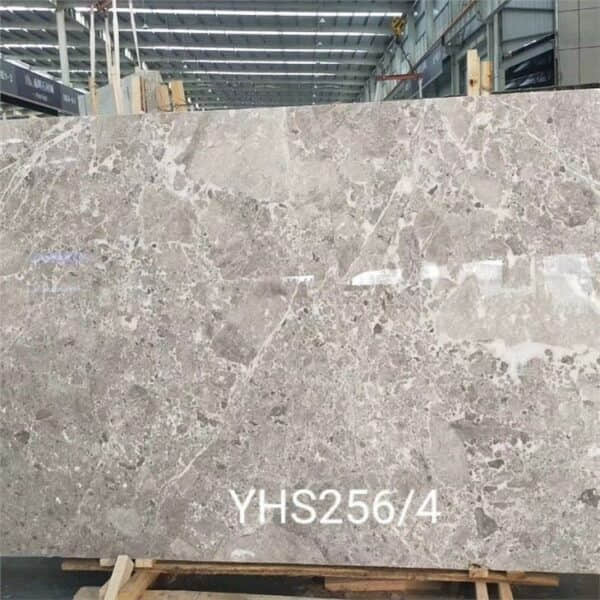
Navigating the complexities of the global stone trade requires a technical understanding of marble types and how regional origins and geological formation impact the landed cost of a project. Marble is a metamorphic rock formed when carbonate rocks, primarily limestone or dolomite, undergo intense tectonic pressure. This process recrystallizes the minerals into a dense matrix where impurities like iron oxide and silica create the distinctive veining patterns prized in luxury architecture. For commercial procurement, evaluating marble types is a matter of material science rather than purely aesthetic choice.
Physical Benchmarks and Technical Specifications
Performance in a corporate or hospitality environment is dictated by the stone's physical properties. Density for commercial-grade marble typically ranges between 2.6 and 2.8 g/cm3, while compressive strength should exceed 1,500 PSI. For load-bearing applications or high-traffic foyers, premium varieties reaching 2,500+ PSI should be specified to ensure structural longevity.
Water absorption rates are a critical metric for lifecycle costs. Materials with a porosity below 0.4% offer significantly better resistance to organic staining and moisture-induced degradation. Because of their calcium-based structure, all marble types remain sensitive to acids. Polished surfaces will etch when exposed to citrus or vinegar-based cleaners, which is why honed or brushed finishes are the professional recommendation for high-use public areas. Unlike industrial granites, marble provides a specific level of design flexibility through diverse finish options:
- Polished: Maximizes color depth and light reflectivity, best for vertical cladding.
- Honed: Provides a matte, anti-glare surface with superior slip resistance for flooring.
- Brushed/Tumbled: Suits rustic schemes and naturally masks surface wear patterns.
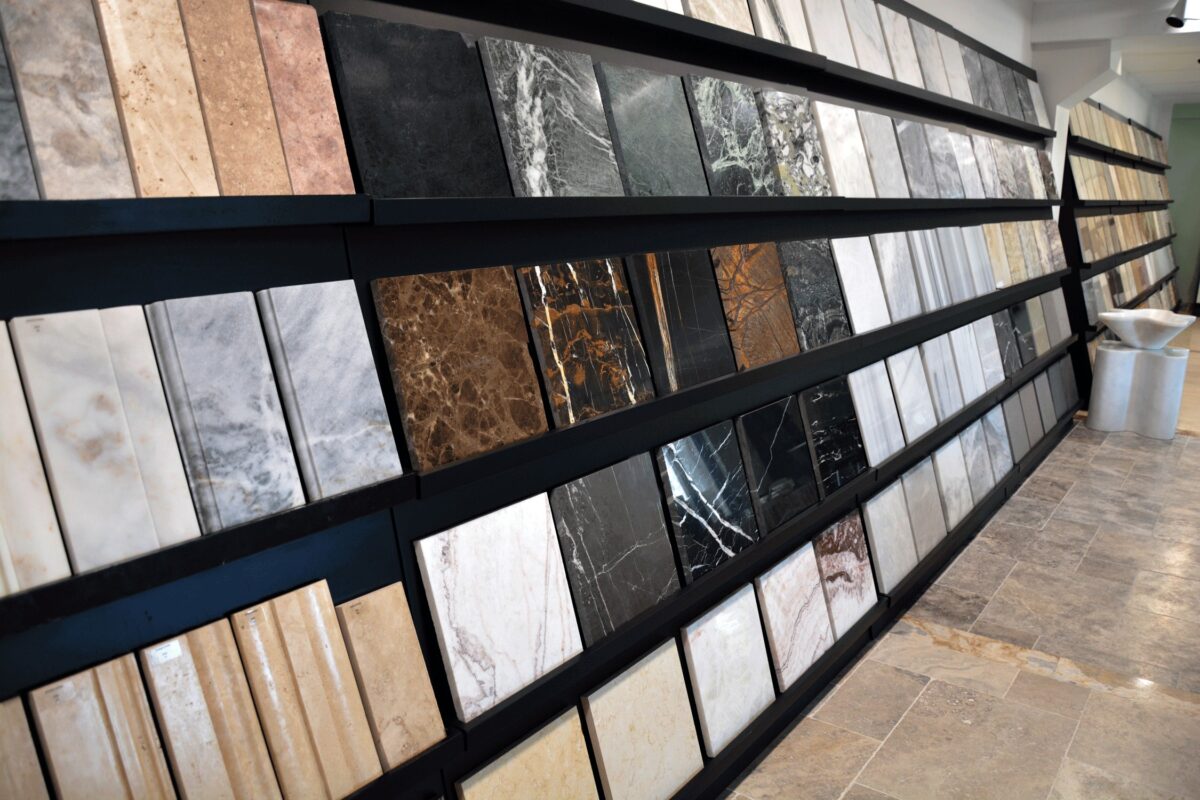
Marble Types by Global Extraction Hub and Market Pricing
Geography is the primary driver of both aesthetics and pricing in the marble sector. The market is structured around a few key regional hubs, each offering different value propositions for the commercial buyer. Italian white marbles remain the global benchmark for prestige, though Turkish and Chinese varieties provide high-volume alternatives at a significant cost reduction.
The European Prestige Market
Italy's Apuan Alps produce the industry's most recognizable white-grey stones. Carrara marble ($45–$75/sqft) is the most accessible Italian white, featuring fine linear veining. Calacatta ($120–$250/sqft) offers bolder, more dramatic ribbons on a whiter field, while Statuario ($180–$300+/sqft) is the rarest, reserved for high-impact statement pieces. Greek Thassos ($90–$180/sqft) provides a pure white crystalline structure that is unmatched in its monochromatic purity, though it requires specific installation expertise due to its translucency.
Commercial Supply Lines from Spain and Asia
Spanish quarries provide the industry's most reliable warm-toned stones. Crema Marfil ($35–$65/sqft) is the global workhorse for commercial flooring due to its uniform beige tone and reliable extraction volumes. Emperador varieties ($40–$80/sqft) provide rich brown tones with characteristic calcite veining. For projects under strict budget constraints, Chinese production (Guangxi White, Sichuan White) now competes at the $25–$50/sqft range while maintaining advancing quality standards for structural applications. Turkish Bursa Beige and Afyon White offer similar Mediterranean aesthetics at 30-50% lower costs than Italian equivalents.
Industrial Grading and B2B Procurement Protocols
Specifying stone for a large-scale project requires adherence to international grading systems. Grade A materials exhibit minimal color variation and no structural fissures. Grade B may include pronounced veining or minor mineral spots, while Grade C permits visible geological "repairs" and significant tonal variation. Pricing deltas for Grade A typically run 40-60% above Grade C for the same variety. Volume pricing structures in the B2B sector usually shift at the 1,000, 3,000, and 5,000 square foot thresholds.
B2B Sourcing FAQ
What are the standard lead times for imported marble?
International procurement timelines vary by origin. Italian marble orders typically require 8 to 12 weeks, accounting for extraction, processing, and ocean freight. Turkish and Chinese sources often deliver within a 6 to 10-week window. Always factor in an additional 1-2 weeks for customs clearance at the port of entry.
How do I ensure batch consistency for large floor fields?
Request all material from the same quarry block and production run. Obtain specific batch numbers and reserve the full project quantity upfront. Including a batch-matching clause in your supply contract, combined with a 10-15% overage, is the only reliable way to prevent tonal shifts across multiple shipments.
Which certifications should be requested from a factory-direct supplier?
For European sourcing, require CE marking. For North American or global structural projects, request ASTM C503 results for flexural strength and ASTM C170 for compressive strength. An ISO 9001 certification indicates the facility follows established quality management protocols.
Order a full-size control sample before finalizing any multi-container contract. We recommend conducting a factory inspection for orders exceeding 5,000 square feet to verify grading consistency before the final balance payment is released.


