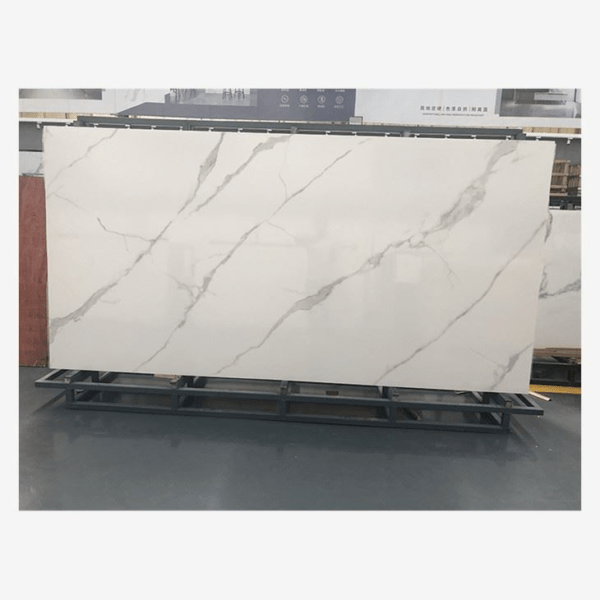
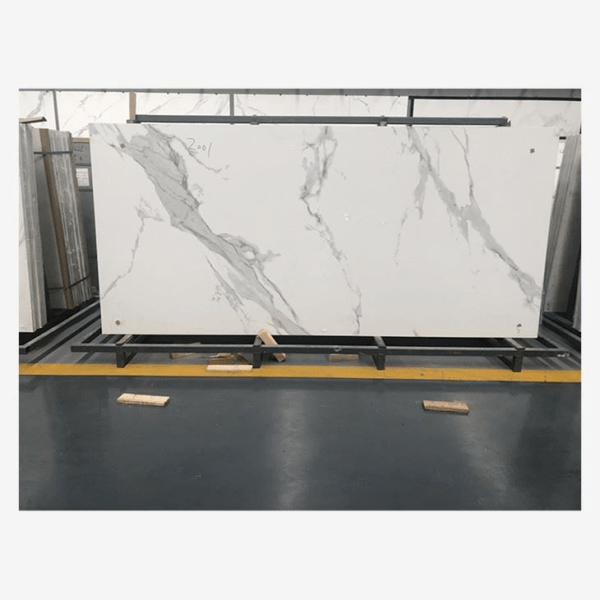
Among the most significant natural stone market news of 2026: new health regulations targeting crystalline silica dust are reaching full implementation across multiple jurisdictions. Following Australia's total ban on high-silica engineered stone and California's permanent emergency standards, B2B buyers and architectural specifiers are rapidly moving away from traditional resin-based quartz toward a new generation of mineral surfaces and FDA-grade sintered stone, which contain less than 1% crystalline silica.
Regulatory Landscape: The Decline of High-Silica Quartz
For over twenty years, engineered quartz has been the baseline for commercial and residential countertops due to its non-porous nature and color consistency. However, the high content of crystalline silica — often exceeding 80% in traditional quartz — has become a major regulatory liability. As of mid-2026, many insurance providers for fabrication firms have significantly raised premiums or excluded coverage for projects using materials with high silica concentrations. This legal and financial pressure is effectively ending the trade of unbranded quartz slabs and forcing a market-wide adoption of low-silica alternatives that utilize recycled glass, porcelain, and bio-resins to maintain structural integrity without the respiratory risks associated with machining traditional stone.
Technical Specifications: Sintered Stone as the Superior Successor
The primary beneficiary of this regulatory shift is sintered stone, an ultra-compact mineral surface that contains no polyester resin binders. Sintered slabs are manufactured using high-pressure pressing and high-temperature vitrification, resulting in a material that is virtually indestructible. For B2B buyers sourcing for high-load zones, sintered stone offers heat resistance up to 1,000°F and complete UV stability, making it a technically strong choice for outdoor kitchens where traditional quartz would yellow or crack. Sintered stone is typically available in 12mm and 20mm thicknesses, with full-body digital technology ensuring that the veining pattern extends through the entire thickness of the slab.
Unlike natural marble, which has a Mohs hardness of 3–4 and is prone to acid etching, sintered surfaces achieve a hardness of 6–7, rivaling natural granite. This makes them ideal for high-traffic hospitality flooring and laboratory benches where chemical resistance is paramount. The manufacturing of sintered stone allows for through-body textures, including honed, leathered, and velvet finishes. These textures provide the tactile feel of natural stone while maintaining an R10 or R11 slip resistance rating — meeting the safety requirements for commercial wet zones without the maintenance burden of periodic sealing required by porous natural materials.
Procurement Impact: Warranty and Liability in the 2026 Market
Specifying materials in the current regulatory environment requires a focus on long-term liability. Leading brands are now offering 15-year limited warranties on their low-silica mineral surfaces, a level of protection that natural stone cannot match. For B2B procurement managers, the predictability of these manufactured products — including guaranteed color matches for replacement slabs — remains a critical advantage for multi-unit residential developments. However, the shift to sintered stone and low-silica hybrids has resulted in a 15–25% price premium over legacy quartz products, a cost that must be factored into project tenders during the early feasibility stages of the 2026 project cycle.