
تتطلب عملية شراء الحجر للردهة الفندقية نهجًا منهجيًا يوازن بين الجماليات والأداء والخدمات اللوجستية. يقدم هذا الدليل إطارًا للمواصفات وقائمة تقييم للموردين لتخفيف المخاطر وضمان نجاح المشروع.
اختيار المواد: الأداء يفوق الجاذبية البصرية المجردة
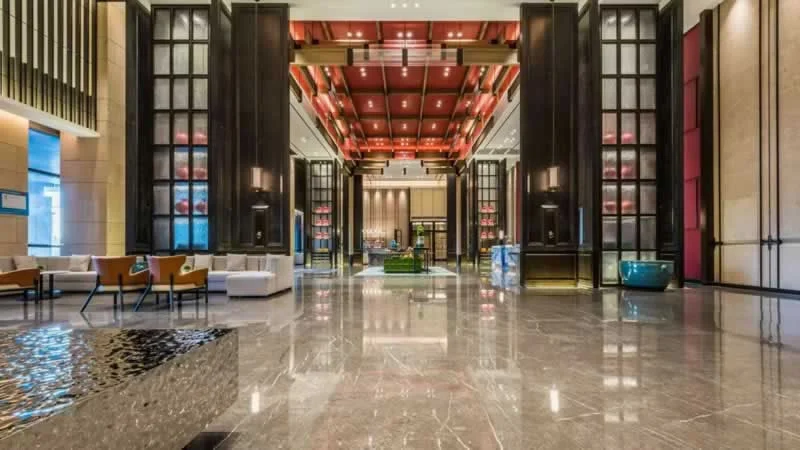
الردهة هي منطقة عالية الحركة وعالية الظهور. يجب أن يأخذ اختيار المادة في الاعتبار حركة المشاة وبروتوكولات التنظيف واحتمالية الصدمات. يوفر السطح المصقول أو الجلدي مقاومة أفضل للانزلاق مقارنة بالسطح اللامع، خاصة بالقرب من المداخل. للأرضيات، يُعتبر السُمك المعاير 20 مم قياسيًا للمتانة التجارية، بينما يُوصى بـ 30 مم للمناطق ذات الأحمال الثقيلة مثل قواعد مكاتب الاستقبال.
ضع في اعتبارك صلابة موس وتكوين الحجر. الجرانيت مثل بيرسيان غراي، بصلابة موس من 6-7، سيتفوق على الرخام الأكثر نعومة مثل كريما مارفيل في مقاومة التآكل. يقدم الكوارتزيت حلاً وسطًا مقنعًا بجاذبية بصرية للرخام وصلابة فائقة. لتكسية الجدران، غالبًا ما يكون السُمك 10 مم أو 12 مم كافيًا، ولكن تحقق من متطلبات الدعم الإنشائي.
الصيانة عامل حاسم غالبًا ما يتم تجاهله. الحجر الكثيف منخفض المسامية مثل جرانيت إيغيان غراي يتطلب ختمًا أقل تواترًا من الترافرتين المسامي. حدد مادة مانعة للتسرب من النوع المشرب لأي حجر في المناطق الرطبة أو حيث يحتمل حدوث انسكابات. اعترف أن جميع الأحجار الطبيعية تظهر تباينًا في اللون والعروق بين الكتل؛ هذه ميزة وليست عيبًا، ولكن يجب إدارتها.
المواصفات الفنية والتوثيق
المواصفات الواضحة تمنع سوء الفهم المكلف. تجاوز الأسماء العامة مثل "رخام رمادي". استخدم الاسم التجاري وأشر إلى المحجر أو منطقة المصدر، مثل "رخام أوفيرفورد فلاور من محجر XYZ". قم بتضمين أبعاد الألواح المطلوبة. لجدار مميز، قد تحتاج إلى ألواح ضخمة (مثل 3200 مم × 1600 مم)، مما يؤثر على اختيار الكتل والتكلفة.
حدد التشطيب بدقة: مصقول، غير لامع، مشعل، ممسوح، أو منفوخ بالرمل. للجدران المطابقة للنقش، يجب ذكر ذلك صراحة في أمر الشراء، لأنه يضاعف هدر المواد ويتطلب منشار جماعي مهرة وقطع بالأشعة تحت الحمراء باستخدام الحاسب الآلي. حدد أشكال الحواف (مثل نصف دائري بقلم الرصاص، مشطوف، مدور) وقم بتضمين رسومات تفصيلية.
قدم عينة مادية معتمدة، مختومة وموقعة من فريق التصميم. تصبح هذه العينة معيارًا لتسامح اللون. افهم أن الحجر المورّد سيكون من كتلة مختلفة عن العينة؛ سيوفر المورد ذو السمعة الطيبة صورًا قبل الشحن أو زيارة إلى ساحة المعالجة لاختيار الدفعة.
قائمة مراجعة المشتريات والخدمات اللوجستية للمورد
فحص المورد لا يقل أهمية عن اختيار الحجر. استفسر عن مصادر الكتل الخاصة به. هل يمتلك محاجر، أم يشتري من مصادر متعددة؟ المصادر المتعددة قد تزيد من عدم تناسق اللون. اطلب مراجع لمشاريع ذات أحجام وتطبيقات حجر مماثلة.
وضح الشروط التجارية. ما هي الكمية الدنيا للطلب؟ لمشروع ردهة كامل، قد تكون الكميات الدنيا 3-5 حاويات. افهم هيكل الدفعة المقدمة - عادة 30-50% لتأمين الكتلة - وجدول السداد. أكد على شرط التسليم التجاري: FOB (التسليم على ظهر السفينة) في ميناء المنشأ شائع، مما يعني أنك تملك البضائع وتتحمل المخاطر بمجرد تحميلها على السفينة.
احجز الجدول الزمني. المهل الزمنية حاسمة. من تأكيد الطلب إلى الشحن قد يستغرق 8-12 أسبوعًا للمواد القياسية، وأطول للقطع المخصصة أو المطابقة للنقش. قم بتضمين جدول إنتاج بمراحل رئيسية: اختيار الكتلة، إنتاج الألواح، التصنيع، التغليف، والتحميل. أضف وقتًا احتياطيًا للتخليص الجمركي والنقل الداخلي.
ضمان الجودة والتنسيق مع التركيب
افحص المادة عند الوصول. تحقق من التلف، ثبات السُمك، وجودة التشطيب مقارنة بالعينة المعتمدة. اتفق على خطة معالجة مع المورد مسبقًا للمواد المعيبة.
نسق مع المثبت مبكرًا. زوده بورقة البيانات الفنية للحجر، بما في ذلك معدل الامتصاص ومواد التثبيت الموصى بها. قد يتطلب حجر مثل دريفت غراي الجيري ملاطًا سريع التصلب غير ملطخ. تأكد من تحضير الركيزة وفقًا للمواصفات لمنع عدم الاستواء أو التشقق.
ما هو أكثر حجر متين لأرضية ردهة الفندق؟
الجرانيت والكوارتزيت هما الخياران الأبرزان. يوفر جرانيت بيرسيان غراي متانة استثنائية بمظهر ثابت وقليل الصيانة. مقارنة برخام كريما مارفيل، الذي يتعرض للتنقر والخدش، يحافظ الجرانيت على تشطيبه تحت حركة المشاة المستمرة مع ختم أساسي فقط.
كيف نضمن تناسق اللون لمشروع كبير؟
يتم إدارة التناسق، وليس ضمانه. اطلب اختيار الكتل من دفعة محجر واحدة. أصر على صور ما قبل التصنيع. للمساحات الكبيرة جدًا، فكر في مزج الحجر من منصات متعددة أثناء التركيب لتخفيف أي تحولات لونية طفيفة. سيقوم المورد الجيد بتجميع الألواح لك.
ما هي المخاطر الشائعة في عملية المشتريات؟
توجد ثلاثة مخاطر رئيسية. أولاً، التقليل من المهل الزمنية وعدم تأمين الكتلة مبكرًا. ثانيًا، المواصفات الغامضة التي تؤدي إلى استلام مادة مختلفة عما تم تصوره. ثالثًا، الفشل في حساب عامل الهدر - قد تصل نسبة الهدر في المطابقة للنقش إلى 40%، بينما تتراوح في التخطيطات القياسية 10-15%.
قرارك النهائي يعتمد على مواءمة الخصائص المتأصلة للحجر مع المتطلبات الوظيفية للردهة، مدعومًا بمورد قادر على تنفيذ المتطلبات الفنية واللوجستية بدقة.


