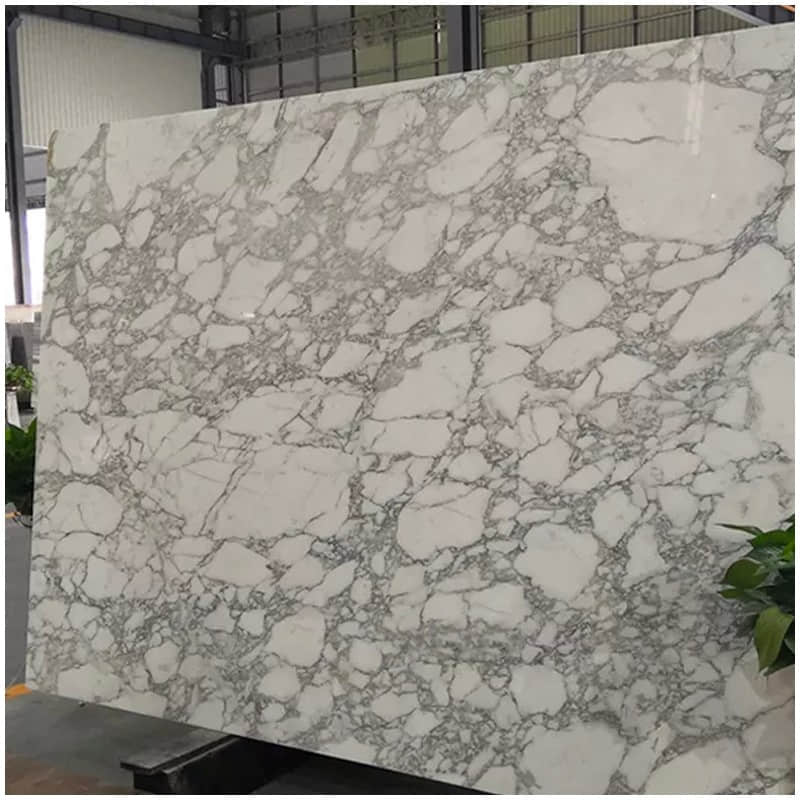
La selección de materiales de revestimiento de alto prestigio para la arquitectura monumental a menudo lleva a los especificadores a los Alpes Apuanos de Italia, el hogar exclusivo del auténtico mármol Calacatta. Esta piedra tiene un precio significativamente superior que refleja tanto su extrema rareza geológica como su rendimiento estructural en interiores de alta visibilidad. Para un vestíbulo de hotel, una torre residencial de lujo o una sede corporativa, comprender en qué se diferencia el Calacatta de los blancos más comunes es esencial para proteger tanto el presupuesto del proyecto como el cronograma de construcción.
Mármol Calacatta vs. Blancos Estándar
La confusión entre Calacatta y Carrara es común porque ambos se originan en la misma cadena montañosa toscana, sin embargo, la distinción comercial es profunda. A diferencia del Bianco Carrara más común, que presenta una base grisácea y un veteado fino "salpicado", el Calacatta se define por una base blanca luminosa y vetas audaces y dramáticas de gris, dorado y tono topo. Esta escasez es una realidad geológica: las vetas de Calacatta representan solo una pequeña fracción del volumen de extracción anual de la región de Carrara.
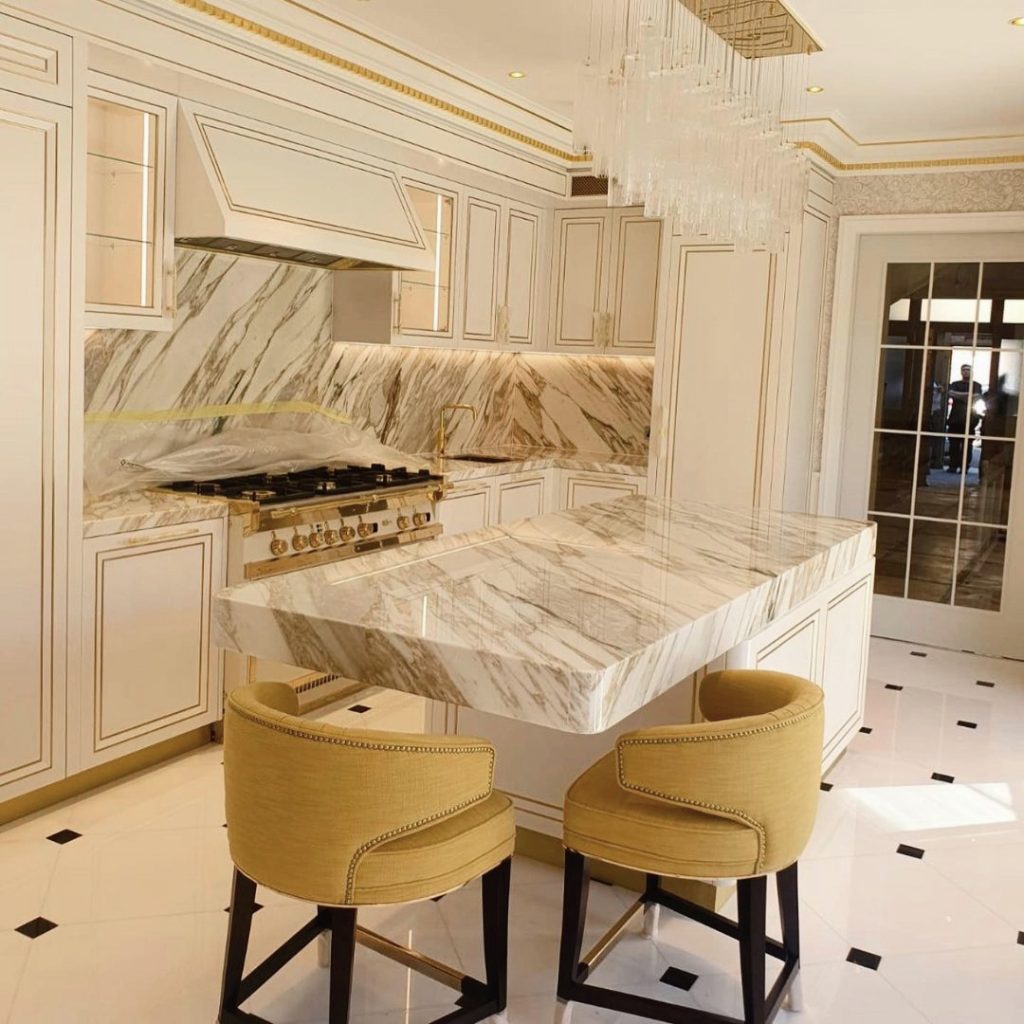
Dentro de la categoría Calacatta, las variedades con nombre determinan la estructura de precios. Calacatta Oro es apreciado por sus vetas cálidas de miel y tonos dorados. Calacatta Borghini se encuentra entre las variedades más raras, con patrones gruesos e intrincados de gris y dorado sobre un fondo de blancura extrema. Calacatta Michelangelo ofrece una estética más tenue con vetas grises más suaves y dispersas. Debido a que la sustitución entre estas variedades a mitad del proyecto es logísticamente imposible, la variedad específica debe fijarse en la etapa de especificación para garantizar una proyección presupuestaria válida.
Rendimiento Industrial y Pautas de Aplicación
El rendimiento en interiores comerciales está respaldado por una densidad que normalmente oscila entre 2.65 y 2.72 g/cm3. Esta estabilidad estructural permite losas de gran formato sin preocupaciones excesivas de carga estructural. Sin embargo, como roca metamórfica a base de calcio, el Calacatta requiere un protocolo de mantenimiento específico en zonas de alto tránsito. Si bien un pulido espejo maximiza el reflejo de la luz en interiores de ascensores o revestimientos de paredes, recomendamos un acabado apomazado o de cuero para pisos comerciales para reducir la visibilidad de marcas de corrosión y abrasión con el tiempo.
| Zona de Aplicación | Acabado Recomendado | Sellado Industrial | Nivel de Mantenimiento |
|---|---|---|---|
| Piso de Vestíbulo | Apomazado o Cuero | Obligatorio Anual | Alto |
| Revestimiento de Paredes | Pulido | Recomendado | Bajo |
| Mostradores de Recepción | Pulido o Apomazado | Obligatorio | Medio |
| Paredes de Baño | Pulido | Obligatorio | Bajo–Medio |
| Interiores de Cabina de Ascensor | Pulido | Opcional | Bajo |
Complejidades de Selección de Losas y Fabricación
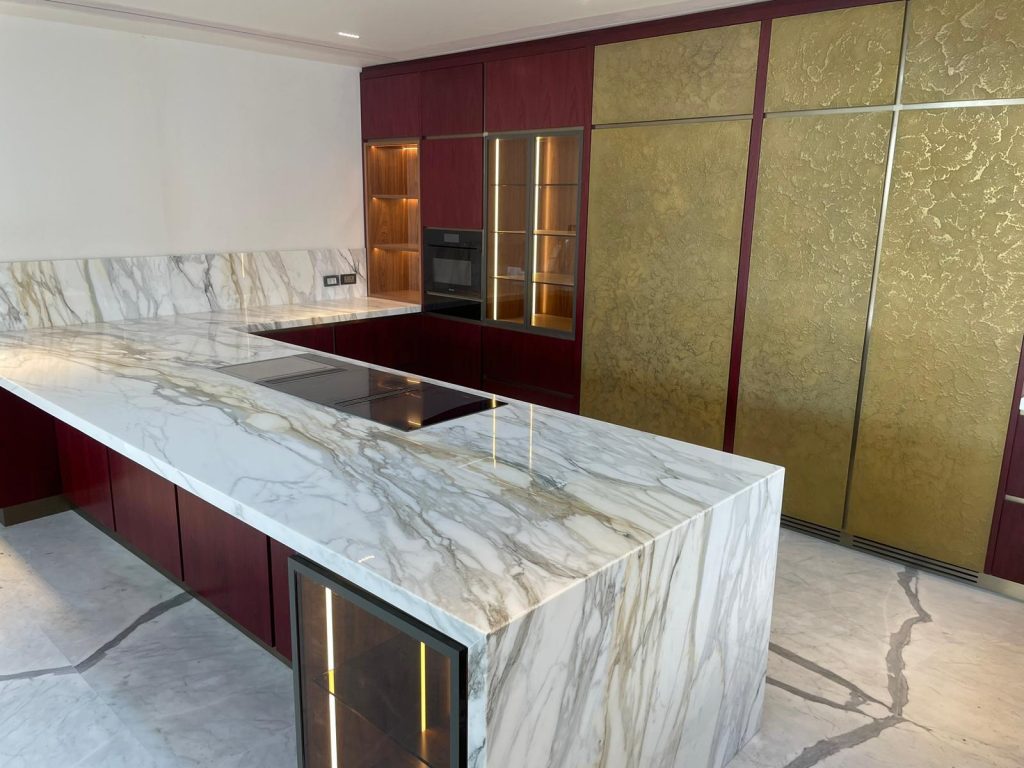
El book-matching es el requisito estándar para instalaciones de Calacatta de alto impacto. Esto implica cortar losas consecutivas del mismo bloque y abrirlas como un libro para reflejar el patrón de vetas. Para que esto tenga éxito, los equipos de adquisiciones deben verificar que el proveedor pueda proporcionar secuencias de losas emparejadas del mismo número de bloque. Proporcionamos documentación de la secuencia de bloques para garantizar la continuidad del patrón en muros de gran escala.
Las fisuras estructurales son una característica natural de los mármoles italianos de alto veteado y deben distinguirse de las grietas por manipulación. Las fisuras paralelas a la cara de la losa son generalmente estables, pero aquellas que atraviesan perpendicularmente el grosor de la losa deben ser evaluadas por un fabricante de piedra certificado antes del primer corte. La fabricación de Calacatta requiere más mano de obra que las piedras estándar debido a la precisión necesaria para las uniones a inglete y la alineación de patrones cortados con chorro de agua. Presupuestar estas horas de mano de obra calificada por separado del costo de la losa en bruto es una buena práctica para los gerentes de proyecto.
Preguntas Frecuentes sobre Adquisiciones
¿Qué tamaños de losa están disponibles comercialmente para Calacatta?
Las losas comerciales estándar generalmente miden entre 110 y 130 cm de ancho y 240 a 340 cm de largo. Para islas monumentales o paneles continuos de piso a techo, ciertos bloques pueden producir losas gigantes de hasta 160 cm x 360 cm. Las losas gigantes tienen un precio superior y la disponibilidad debe confirmarse contra un inventario de bloques específico antes de emitir la especificación final.
¿Cómo se relaciona el precio del Calacatta con el Carrara estándar?
Como referencia comercial general, el Calacatta Oro generalmente tiene un sobreprecio del 30–60% sobre el Carrara estándar. Las subvariedades raras como Borghini pueden exceder el precio del Oro en otro 40–80% dependiendo de la escasez actual del mercado y el nivel de blancura del lote disponible.
¿Cuál es el cronograma total del proyecto para la adquisición de mármol italiano?
Desde la confirmación de la orden de compra hasta la entrega en el sitio del proyecto en EE. UU. o mercados globales, el cronograma generalmente abarca de 16 a 22 semanas. El flete marítimo desde puertos italianos representa de 6 a 14 semanas, con 1 a 2 semanas adicionales para el despacho de aduanas. La fabricación generalmente requiere de 3 a 6 semanas dependiendo de la complejidad del book-matching y el trabajo de bordes.
Fijar la variedad específica, la fuente del bloque y las dimensiones de la losa durante la fase de desarrollo del diseño es la forma más efectiva de prevenir el riesgo de sustitución. Solicite fotos de inventario actuales de alta resolución y un diagrama de la losa que marque todas las fisuras naturales antes de autorizar el depósito inicial.


