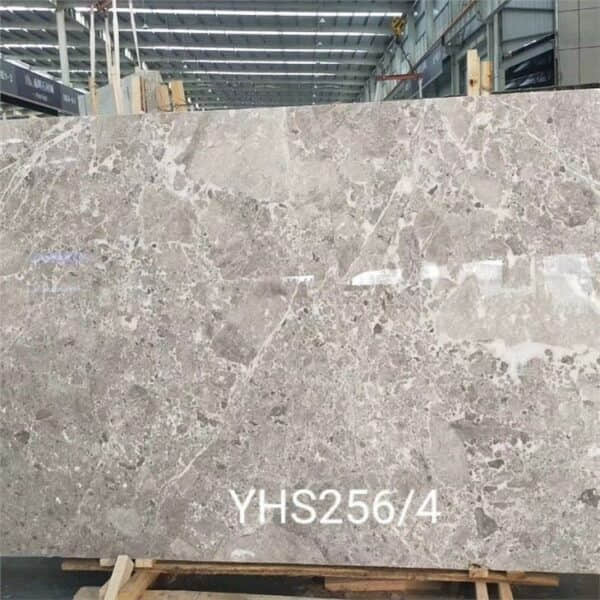
Especificar el grosor de la piedra correcto es una decisión técnica que afecta la integridad estructural, la logística de instalación y el costo del proyecto. Si bien 20 mm y 30 mm son los estándares de la industria para losas, la elección depende en gran medida de si el material está destinado a pisos horizontales, revestimientos verticales o superficies de alta carga como Encimeras de cocina.
Cómo la producción con sierra de marco define el grosor estándar de las losas
El proceso de fabricación de una losa de piedra comienza en la sierra de marco, donde grandes bloques se cortan en láminas utilizando hojas de alta tensión. Durante esta fase de producción primaria, el bloque se calibra para producir grosores de 20 mm o 30 mm. Las losas estándar de 20 mm son la norma mundial para pisos residenciales y revestimientos de paredes debido a su peso reducido, lo que simplifica la manipulación y reduce los costos de envío por metro cuadrado. En contraste, las losas de 30 mm suelen reservarse para aplicaciones que requieren mayor resistencia a la flexión o perfiles de borde específicos que no se pueden lograr con material más delgado.
Comparación de especificaciones de rendimiento: 20 mm vs 30 mm
Las propiedades físicas de la variedad de piedra, ya sea un granito denso o un mármol dolomítico más frágil, deben sopesarse con el grosor de la losa. Una losa de 30 mm ofrece una resistencia significativamente mayor al impacto y la presión, por lo que es la especificación preferida para islas de cocina de lujo y encimeras comerciales de uso pesado.
| Característica de especificación | Losas de piedra de 20 mm | Losas de piedra de 30 mm |
|---|---|---|
| Peso por metro cuadrado | Aprox. 50-55 kg (Mármol/Granito) | Aprox. 75-82 kg (Mármol/Granito) |
| Soporte estructural | Requiere soporte secundario frecuente | Autoportante en vanos más amplios |
| Potencial de perfil de borde | Limitado a uniones biseladas o ingleteadas | Bocel completo, Ogee y Dupont |
| Mejor aplicación | Pisos interiores, revestimiento de paredes | Encimeras de cocina, peldaños de escaleras |
Por qué las encimeras se benefician del grosor de 30 mm
Para encimeras de cocina y vanitorios de baño, el grosor de 30 mm es a menudo la opción superior para la adquisición B2B. Los 10 mm adicionales de material proporcionan la masa necesaria para manejar recortes de fregaderos empotrados y cortes complejos con CNC infrarrojo sin aumentar el riesgo de microfisuras.
Especificaciones de grosor de piedra para pisos profesionales
En proyectos de pisos comerciales a gran escala, 20 mm es el estándar de la industria para baldosas y losas calibradas. Por ejemplo, un granito China Green de 20 mm superará en durabilidad a una piedra caliza blanda de 30 mm.
Preguntas frecuentes
¿La piedra de 30 mm cuesta un 50% más que la de 20 mm?
No. Normalmente, las losas de 30 mm tienen un sobreprecio del 20-35% dependiendo de la variedad y el origen de la piedra.
¿Es el mármol de 20 mm demasiado fino para una isla de cocina?
Técnicamente, el mármol de 20 mm se puede usar si se refuerza con un soporte completo de contrachapado. Para una isla con aspecto sólido sin juntas, se recomienda 30 mm.
¿Puedo mezclar 20 mm y 30 mm en el mismo proyecto?
Sí. Especifique 20 mm para revestimiento de paredes y pisos, mientras usa 30 mm del mismo bloque para tapas de vanitorios y umbrales.
¿Cómo afecta el grosor al envío y la logística?
Un contenedor estándar de 20 pies contiene aproximadamente 400-450 m² de piedra de 20 mm, pero solo alrededor de 280-300 m² de material de 30 mm.
Las dimensiones estándar de las losas son aproximadamente 280x160 cm; asegúrese de que el grosor elegido pueda ser manipulado de forma segura por los equipos de instalación locales antes de la entrega.


